Loading...
First Round of Abstract Submission Ends: Dec 31, 2026
Extended Early Bird Ends: Oct 28, 2026

Keynote Speakers

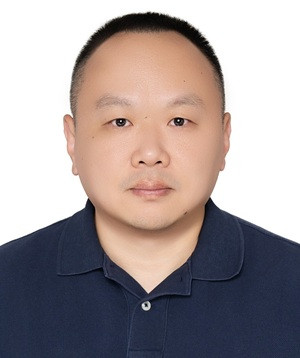
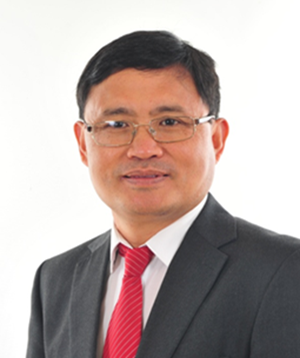
Prof. Lun Hu
Xinjiang Technical Institute of Physics and Chemistry, CAS, China
Title: AI enables accurate identification of cancer driver genes.
Lun Hu received the B.Eng. degree from the Department of Control Science and Engineering, Huazhong University of Science and Technology, Wuhan, China, in 2006, and the M.Sc. and Ph.D. degrees from the Department of Computing, The Hong Kong Polytechnic University, Hong Kong, in 2008 and 2015, respectively. He is currently a professor with the School of Computer Science, Central China Normal University, Wuhan, China. Dr. Hu has published more than 150 papers in top-tier journals, such as Nature Biomedical Engineering, Nature Communications, and Advanced Science. He was recognized among the World's Top 2% Scientists (2023-2025). Dr. Hu was the recipient of IEEE Transactions on Fuzzy Systems Outstanding Paper Award. He is currently serving as an Associate Editor for IEEE Transactions on Computational Biology and Bioinformatics, and IEEE Journal of Biomedical and Health Informatics.
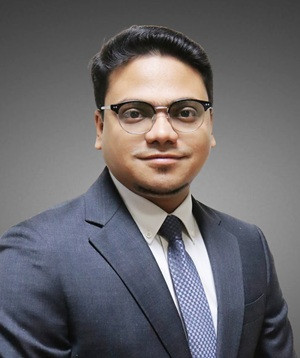
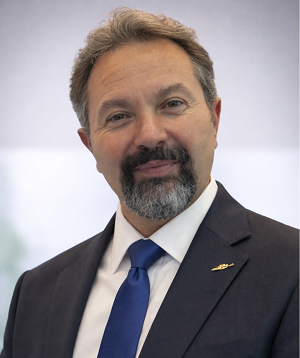
Dr. Indranath Chatterjee
Manchester Metropolitan University, UK
Title: Beyond Pixels: Predictive AI and the Next Era of Neurodegenerative Disease Management
Dr. Indranath Chatterjee is working as an Associate Professor in the Department of Computer and Mathematics at Manchester Metropolitan University, Manchester, UK. Currently, he is also attached to Woxsen University, India, Chitkara University, India and Mody University, India as Adjunct Professor, and as a Collaborating Faculty at the International Center for Neuroscience Research, Georgia. He also holds the position of AI Research Consultant at Korea Aerospace University, South Korea and as a General Director (International Collaborations) of The Korea Multimedia Society (KMMS), South Korea.

His research areas include Computational Neuroscience, Schizophrenia, Medical Imaging, fMRI, and Machine learning. He has authored and edited 12 books on Computer Science and Neuroscience published by renowned international publishers. To date, he has published numerous research papers in international journals and conferences. He is a recipient of various global awards in neuroscience. Throughout his career, he has presented more than 28 keynote/plenary talks at various international conferences and seminars worldwide.

He is currently serving as a Chief Section Editor of a few renowned international journals and serving as a member of the Advisory board and Editorial board of various international journals and Open-Science organizations worldwide. He is presently working on several projects of government & non-government organizations as PI/co-PI, related to medical imaging and machine learning for a broader societal impact, in collaboration with several universities globally.

He is an active professional member of the Association of Computing Machinery (ACM, USA), Korea Multimedia Society (KMMS, Korea), Organization of Human Brain Mapping (OHBM, USA), Federations of European Neuroscience Society (FENS, Belgium), Association for Clinical Neurology and Mental Health (ACNM, India), ALBA Network (Belgium), Society of The Society of Neuroscientists of Africa (SONA,South Africa), and International Neuroinformatics Coordinating Facility (INCF, Sweden).
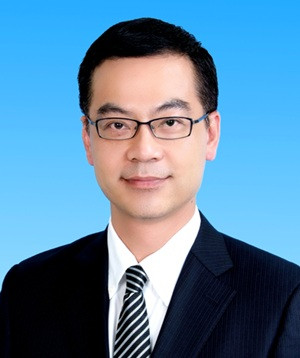
Prof. Yu-Chen Hu
National Tsing Hua University, Taiwan
Title: Programmable Gene Editing and RNA Delivery for Regenerative Medicine
Dr. Yu-Chen Hu is currently the Dean of College of Engineering at National Tsing Hua University. He is the vice president of Asian Federation of Biotechnology and is the deputy editor of Journal of Taiwan Institute of Chemical Engineers, Frontiers in Biotechnology and Bioengineering and editor of Scientific Report. Dr. Hu is a pioneer using baculovirus for gene delivery, regenerative medicine and cancer therapy, making baculovirus a promising vector for gene therapy. Dr. Hu is a leader in CRISPR technology for tissue regeneration and metabolic engineering. He has combined RNA-guided CRISPR technology and synthetic biology to metabolically engineer microorganisms to produce a bio-derived chemical with the highest titer in the world. Dr. Hu also develops various CRISPR and RNA editing platforms to modulate stem cell differentiation to improve regeneration of different tissues. Dr. Hu has been invited to deliver 106 invited talks internationally, including 37 keynote and 13 plenary lectures, and has been continuously listed among the Stanford/Elsevier World’s Top 2% Scientists for nine consecutive years (2017–2025). Dr. Hu has won numerous academic awards and is a fellow of 6 academic societies.
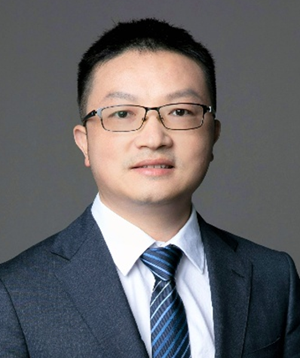
Prof. Xiaowu Huang
Guangdong Technion-Israel Institute of Technology, China
Title: Thriving in Salt: Anammox for saline sewage treatment
Xiaowu is a tenured Associate Professor at Guangdong Technion-Israel Institute of Technology. He received his PhD degree in Environmental Engineering from Kumamoto University, Japan, completed his postdoc training at The Hong Kong Polytechnic University and The University of Hong Kong, and was a visiting scholar at University of Hawaii at Hilo and Swiss Federal Institute of Aquatic Science and Technology (EAWAG). His research mainly focuses on wastewater treatment and resource recovery, biowaste recycling, and biomass refinery. He has published over 40 peer-reviewed articles in leading environmental journals and has received several technology innovation awards including the Guangdong Science and Technology Progress Award and Guangdong Environmental Protection Science and Technology Award. Currently he serves as the editorial board member for Water Research, editor for Journal of Environmental Management and executive editor for Current Research in Biotechnology.
Prof. Shang-Ming Zhou
University of Plymouth, UK
Title: Beyond Haematuria: Machine Learning Reveals Novel Electronic-Health-Record Signals for Early Bladder Cancer Detection
Dr. Shang-Ming Zhou is a distinguished Professor in eHealth at the University of Plymouth, UK, where he serves as the Associate Head of School of Nursing and Midwifery for Research, Chair of Operational Artificial Intelligence Group, and Deputy Director of the Centre for Health Technology in the Faculty of Health: Medicine, Dentistry and Human Sciences.

Professor Zhou's research focuses on AI-driven personalized medicine, health informatics, health data science, disease phenotyping, risk stratification, polypharmacy, multimorbidity, and public health research. His research on integrating information from multiple sources through advanced methods of type-1 and type-2 OWA operators has paved the way for data integration and aggregation under uncertain environments. He leads different projects, advancing healthcare data analytics for patient-centric innovations. He has also been awarded externally funded grants worth over £10 millions. Dr Zhou is the member of Editorial Board for 15 international journals.

Research Interests:

AI-driven personalized medicine, health informatics, health data science, disease phenotyping, risk stratification, polypharmacy, multimorbidity, and public health research.
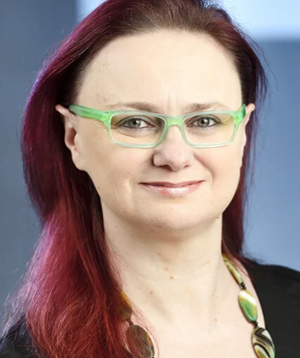
Prof. Monika Schmoll
University of Vienna, Austria
Title: Fungal biotechnology and the fascinating abilities of production organisms evolved by nature - what can we learn?
Dr. Monika Schmoll received her degree and Ph. D. on the topic of “Regulation of cellulase expression and signal transduction in the filamentous fungus Hypocrea jecorina (Trichoderma reesei)” at the Vienna University of Technology, Austria. Besides gaining postdoctoral experience and building her own group at the Vienna University of Technology, she has been a visiting scientist in the laboratory of Professor N. Louise Glass (Department of Plant and Microbial Biology, University of California, Berkeley, USA), the University of Rome La Sapienza and the University of Szeged, Hungary. Dr. Schmoll acquired funding for research in her group with competitive internationally peer reviewed projects of more than 4.2 million EUR. In march 2013 she completed her habilitation at the Vienna University of Technology in the field of “Molecular Genetics and Genomics”.

She is author of 100 publications including (co)-editorship of four books, with an impact factor of >450, resulting in an h-factor of 40. Currently, Dr. Schmoll is senior scientist at the University of Vienna, Austria.

The primary research field of Dr. Schmoll has been on the interface of enzyme expression, chemical communication upon sexual development and plant recognition and sensing of nutrients, with an emphasis on light modulated processes in the filamentous fungus Trichoderma reesei. She showed for the first time that cellulase gene expression is modulated by light in T. reesei and could since then elucidate important mechanistic details on the underlying mechanism. Her group discovered the sexual cycle in the biotechnological workhorse Trichoderma, which had previously been considered asexual. Based on these discoveries, studies on environmental sensing and chemical communication between mating partners and with plants complemented her research aims. Additionally, Dr. Schmoll contributed to genome annotation of several fungi (Trichoderma spp., Aspergillus nidulans, Postia placenta, Ceriporiopsis subvermispora, Phlebiopsis gigantea), especially in the field of signal transduction. An in depth annotation paper on three Trichoderma species from an international consortium of authors with Dr. Schmoll as lead author has been published in 2016. In recent years, the group of Dr. Schmoll also applied their expertise to investigate biocontrol abilities, chemosensing and development in natural isolates of Trichoderma for agricultural applications.

Since 2022, Dr. Schmoll turned towards ecology and will integrate her expertise from studies on gene regulation and physiology in individual fungi with metaomics approaches in natural ecosystems to understand microbial life in extreme habitats and contributions of microbes to climate change.
Dr. Hikmet Budak
Arizona Western College, USA
Title: Twenty Years of Genomics: Scientific Advances, Technological Innovations, and Future Prospects
Dr. Budak earned his Ph.D. from the University of Nebraska-Lincoln, majoring in Plant Genetics and Breeding with a minor in Statistics. He has held diverse leadership positions: Early in his career at The University of Nebraska serving as a Coordinator of grass genetics, at Sabanci University as a Program Coordinator leading genetics/genomics and at Montana State University serving as an Endowed Chair and at Montana BioAg. Inc. as a Chief Science Officer. Dr. Budak led the Plant Genomics Team for over 20 years, securing numerous national and international grants, and supervising/teaching both graduate and undergraduate studies (chaired/supervised a total of 12 PhD and 15 MSc students as they currently are assistant or associate professors in numerous countries). Funding for these projects was obtained from a plethora of sources, including the European Union (EU), EU-Marie Curie, NSF, USDA, Harvest Plus, DOE agencies.

Dr. Budak currently serves as a Professor and Director of Agriculture Programs at Arizona Western College. He maintains an active role as an Adjunct Professor at the University of Nebraska-Lincoln. He is authored over 160 research papers, 12 book chapters, 23 review articles, and edited 3 book in high impact journals such as Science, Nature, Nature Genetics. He has been serving as a board member of the International Wheat Genome Sequencing Consortium (IWGSC), Scientific Advisor to CuriGenomics, and the USDA and NSF. Recently, he was awarded the USDA Kekika La Fellow and Achievement Award by WORLD COMPUTATIONAL BIOLOGY. He has also been an editor and associated editor of several prestigious journals, including BMC Genomics, Functional Genomics, Genetics, Frontiers in Genetics, and In Silico Plants.
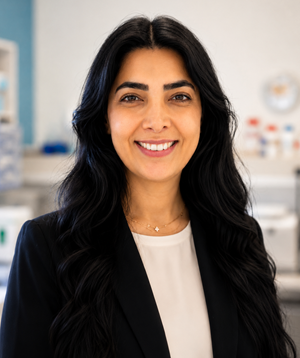
Dr. Zeinab Ghasemishahrestani
University of Cape Town, South Africa
Title: From Molecular Discovery to Patient-Derived Models: Translational Strategies for Targeting Fibrosis and Pathological Scarring.
Dr. Zeinab Ghasemishahrestani is a translational biomedical scientist and Postdoctoral Research Fellow at the University of Cape Town, South Africa. She holds a PhD in Biochemistry and has more than five years of postdoctoral research experience spanning fibrosis, keloid disease, wound healing, cancer biology, and human-relevant disease modelling. Her current research focuses on understanding molecular mechanisms underlying pathological scarring and translating these discoveries into potential therapeutic strategies. She has established patient-derived 2D, 3D, and ex vivo models for mechanistic and preclinical research and integrates transcriptomics, proteomics, histopathology, molecular biology, and cell biology for biomarker discovery and therapeutic-target validation. Her research includes investigation of the PAPP-A/IGF–PI3K/AKT/mTOR signalling axis and evaluation of targeted therapeutic approaches in keloid disease. She has authored 16 peer-reviewed publications, contributed to international and cross-sector research collaborations, and is actively involved in postgraduate supervision, scientific mentorship, and research leadership.